

Rosehip tea is a delicious, refreshing, fruity herbal tea that is super easy to make. Whether you've foraged rosehips from the hedgerows or bought them dried, this simple infusion is packed with flavour and high in vitamin C.
Learn how to make rosehip tea properly, including how to prepare rosehips and how to get the best flavour and nutrients.

Jump to:
What are rosehips?
Rosehips are small orange or red fruits which develop after a rose fades. Although cultivated roses can produce hips, the most flavoursome come from wild roses, or dog roses, which are simple single flowers, usually a beautiful pink or white in colour.
Whilst you can grow wild roses in your garden, they are also commonly found in hedgerows in the UK. The attractive rosehips will be ripe and ready to pick from late summer through to the winter.

When and where to forage rosehips
Rosehips usually ripen from September onwards in the UK, although in recent warmer years some in my garden have been ready as early as August. The hips should be bright in colour and firm to the touch.
Although I've often read to pick them after the first frost, I usually pick them as soon as they are fully ripe, as they often wizen up later. And as I generally freeze my rosehips, they get the benefit of a cold snap in my freezer;)
Rosehips are quick and easy to harvest. Use pruning shears or snippers to cut the hips off the branches. Of course, thick gloves are advisable so that you don't get pricked by the thorns!
If you don't have wild roses in your garden, they are common in hedgerows in the UK and grow in sun or partial shade. Try to forage from plants alongside footpaths away from heavy traffic, and out of reach of chemical sprays.
If you don't have access to fresh rosehips, dried rosehips are widely available online. If you have the choice, buy whole rosehips as they'll retain more of the nutrients than those that have been shredded.
How to prepare and store rosehips for tea
Give your rosehips a quick rinse and pick out any stems or leaves. If you like, you can trim away the bit of blossom on the end of the hip with a pair of scissors, but it is not essential, and you'll need to strain the tea anyway.
I always leave rosehips whole. If you cut them open, there are little seeds and hairs which can be very irritating to the skin and digestive system. So if you want to crush or chop rosehips before making tea, you'll need to carefully sieve them out, which can be very time-consuming.
Freezing rosehips
Unless I am making tea immediately, I always freeze rosehips. I simply pop whole fresh rosehips in a plastic bag, which I seal and freeze. When I want to make tea I take a handful of the hips out of the bag and reseal it. That way, I have a supply of rosehips to make tea throughout the winter.
Personally, I think freezing rosehips is the best way to preserve them for tea. It is much easier than drying them, and retains more vitamin C and other nutrients. Freezing also breaks down the cell walls, making the rosehips softer so that it's easier to extract the flavour for a good-tasting tea.
However, if you would prefer to dry rosehips, spread them out on a tray and leave them to dry in a warm, dark, sheltered place for at least 2 weeks. The dried hips should feel brittle to the touch and can be stored in an airtight jar. Alternatively, you can dry rosehips overnight on a tray in the oven on its very lowest setting.
Dried rosehips have a good flavour, but will be lower in vitamin C.
Fresh rosehips can be stored in a bag in the fridge for a week.
Health benefits of rosehips
Rosehips are a very good source of vitamin C, and they also contain other beneficial plant compounds and essential fatty acids. Extract of rosehip is sold as a herbal remedy for arthritis and joint pain as it is a powerful anti-inflammatory.
If you make your own tea from fresh or frozen rosehips, it will contain more antioxidants than a teabag made with dried fruits. However, you won't be getting the full effect that you'd have from a rosehip extract.
I usually enjoy rosehip tea during the cold season, and I find a warm mug of tea is soothing for a sore throat.
The tea is also caffeine-free, so it can be enjoyed at any time of day.
Read more here about the health benefits of rosehip tea.
How to make rosehip tea
It is best to make rosehip tea in a teapot, as you'll need to strain it. You can use a fine tea strainer. But you could improvise with a heatproof bowl or jug and a fine sieve or piece of muslin cloth.
Place about 8-10 whole rosehips in the pot - they can be either fresh, dried or frozen (no need to thaw them first). Cover with just-boiled water and leave for 10 minutes. You can steep the tea for longer if you'd prefer a stronger flavour.
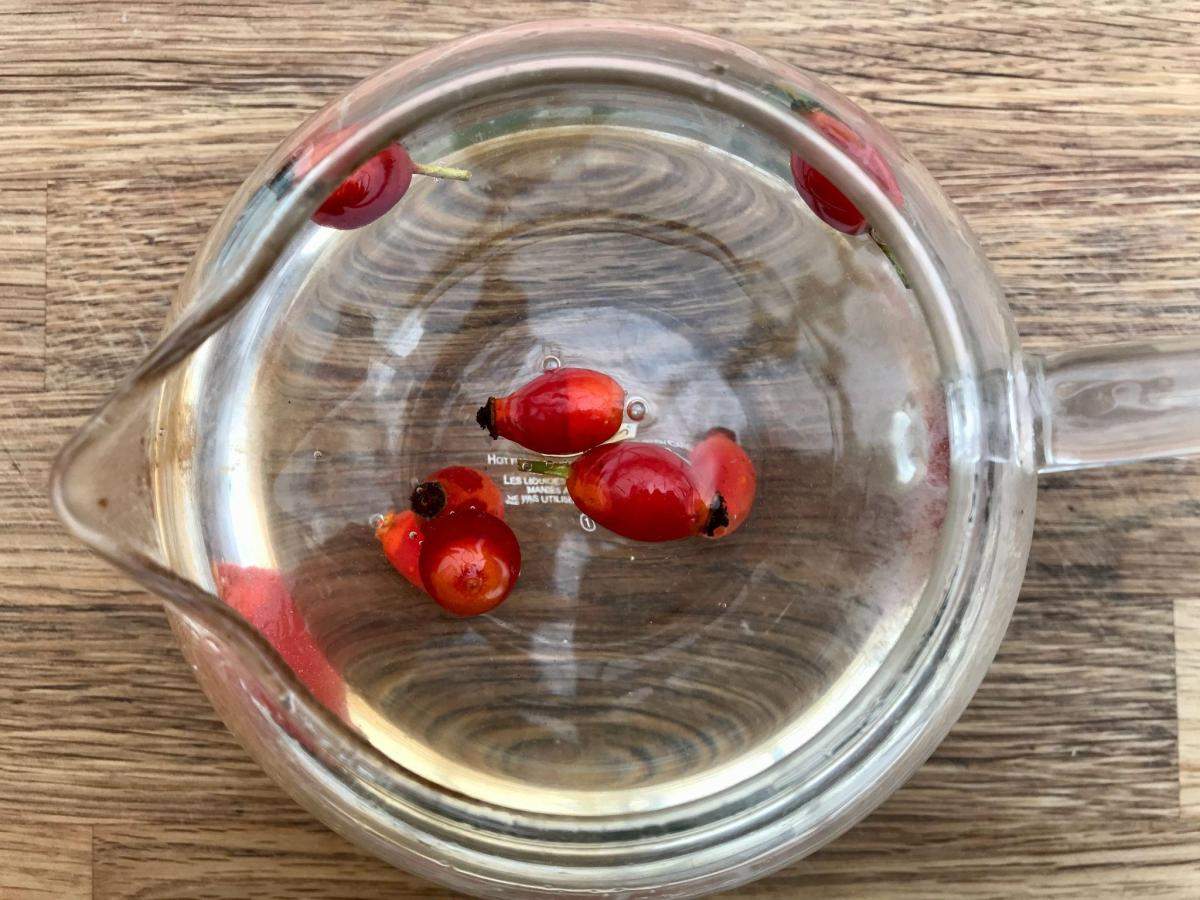
I then like to squish the hips with a fork inside the pot to extract more of the flavour and goodness.
It's important to strain the tea with a fine strainer as some of the hips will be broken open. That way, you'll remove any seeds and the irritating little hairs that surround them. Anecdotally, the fuzzy hairs have been used as itching powder, so you really don't want those in your tea!!
The brewed tea will have a deep peachy pink colour and a tangy, slightly sweet flavour. If you like, you can sweeten your homemade rosehip tea with a teaspoon of honey.

Recipe Tips
- I prefer not to simmer rosehips when I'm making tea so as to maximise the vitamin C and other nutrients. My quick steep method with just boiled water is also easier
- If you want to make your tea more concentrated, you can simply add more rosehips to the pot and steep for a little longer. Remember to squish the flavour and goodness out of the hips once they have softened in the pot
Iced Rosehip Tea
You can enjoy rosehip tea chilled in the summer. Add a few extra rosehips to the pot to make the tea a little stronger as the flavour will be less pronounced when it is served cold.
Chill the brewed tea in the fridge and serve over ice.
Frequently ask questions
You really don't need to! Just give them a quick rinse if necessary, remove any stems and leaves and pop the whole rosehips in the teapot. If you want to enjoy the tea at other times of the year, it's best to freeze them.
All rosehips are edible and can be used for tea. However, the rosehips from the dog rose are the most flavoursome. The hips on the Japanese Rosa Rugosa are very large and round and a little less concentrated.
You don't need to remove the seeds before brewing tea, but it is essential to remove all the seeds and little hairs before drinking rosehip tea, as the hairs can irritate the throat and digestive system. The easiest method is to put the rosehips in the pot whole and strain the finished tea through a fine strainer.
Other foraged herbal teas
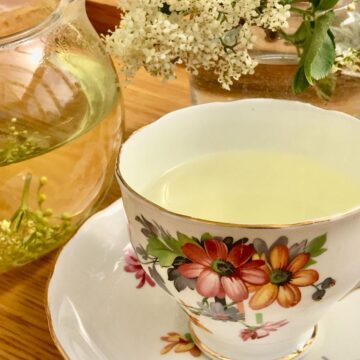
Why not try making some other healthy drinks or wild foraged teas at home? Nettle and mint tea and this elderflower tea recipe are very easy to make. If you grow your own strawberries, you can make strawberry leaf tea.
Or try some quick elderberry cordial. You might be able to forage most of the ingredients for free!



Recipe

How to Make Rosehip Tea (Fresh, Dried or Frozen Rosehips)
Equipment
- Teapot or heatproof jug or bowl
- Fine strainer
Ingredients
- 8-10 rosehips washed
- 400 ml boiling water
Instructions
- Add fresh, dried or frozen rosehips to a teapot. Cover with 400 ml of boiling water.8-10 rosehips, 400 ml boiling water
- Steep for 10 minutes.
- Squeeze the rosehips against the side of the teapot with a fork to extract more of the flavour.
- Strain with a fine strainer before drinking. This is vital as the seeds are surrounding by fine hairs which can irritate the throat and digestive system.
craig eydmann says
I add boiling water for 5 minutes which softens them
Then cut a slit and scoop out seeds/hairs
Return to cup add more boiling water for 5 minutes
Then enjoy
Fiddly on small but easy on large rosehips
Donna says
I dry mine, keep them in paper brown bags in the freezer. When I get ready to make tea , I put rose hip in a ziplock bag, get the air out and break them with a wooden hammer. I boil water and add the tea, after 10 min it’s ready , if I use a big tea pot I use it again and tea is great.
Wendy Faulkner says
Good tip thank you. I just pop the whole hips (straight from the bush) in the freezer and take out a few at a time. Remember if you break up the hips that you'll need to make sure the tea is well strained so that the little hairs are removed:)
Jess says
Rosehips seeds are covered in tiny hairs which can irritate your throat and digestive system so you should always strain thru a fine muslin cloth if you are not removing these prior to use xxx
Wendy Faulkner says
Hi, thanks for your tip Jess. I strain my rosehip tea through a fine tea strainer, but a muslin cloth would be great too.
Leanne says
Do you cut the rosehip or let it steep whole?
Wendy Faulkner says
Hi, I steep them whole, but I squeeze them against the side of the pot once they've steeped for a few minutes to extract the most flavour.